

2023-12 Stories of Idioms (III)
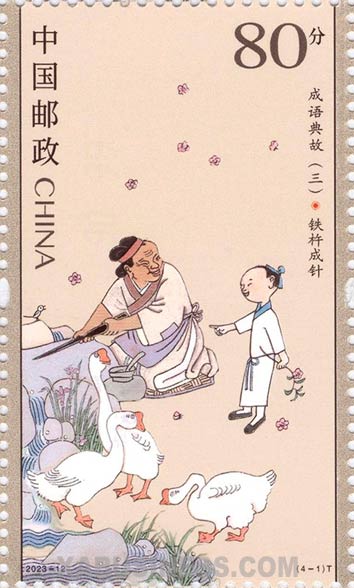
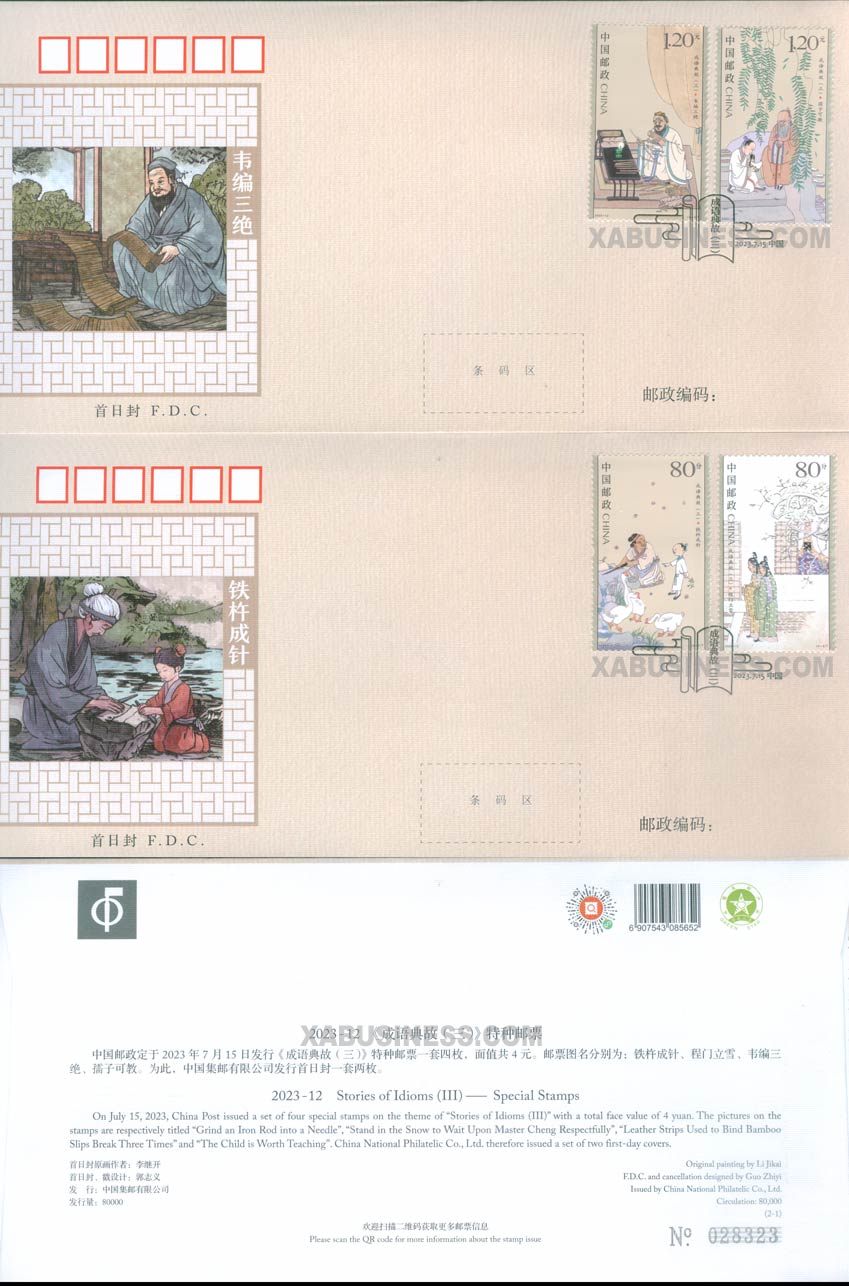
 (4-1), Grinding an Iron Rod into a Needle, 80 fen, 30 * 50 mm
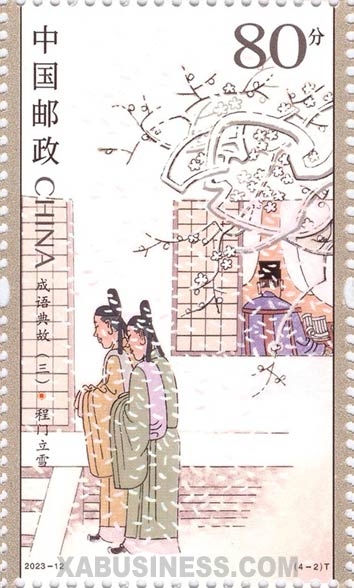 (4-2), Standing in the Snow before Cheng Yi's Gate, 80 fen, 30 * 50 mm
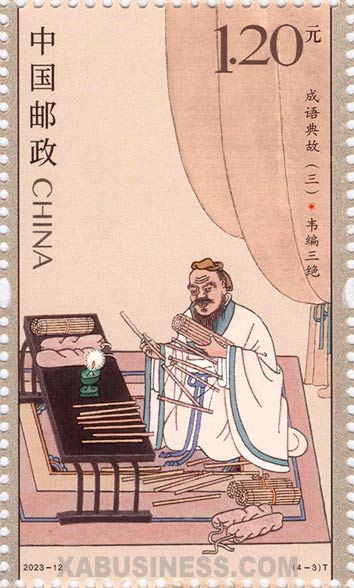 (4-3), The Book's Leather Binding Broken Three Times From Constant Use, 120 fen, 30 * 50 mm
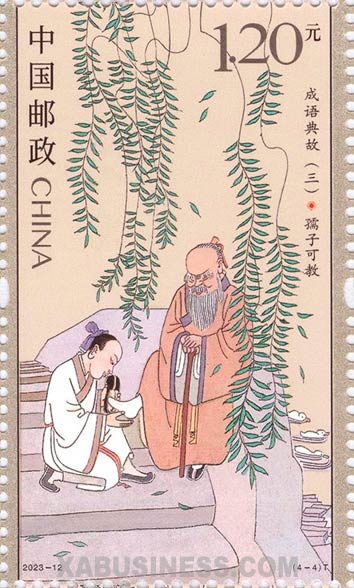 (4-4), The Child Is Worth Teaching, 120 fen, 30 * 50 mm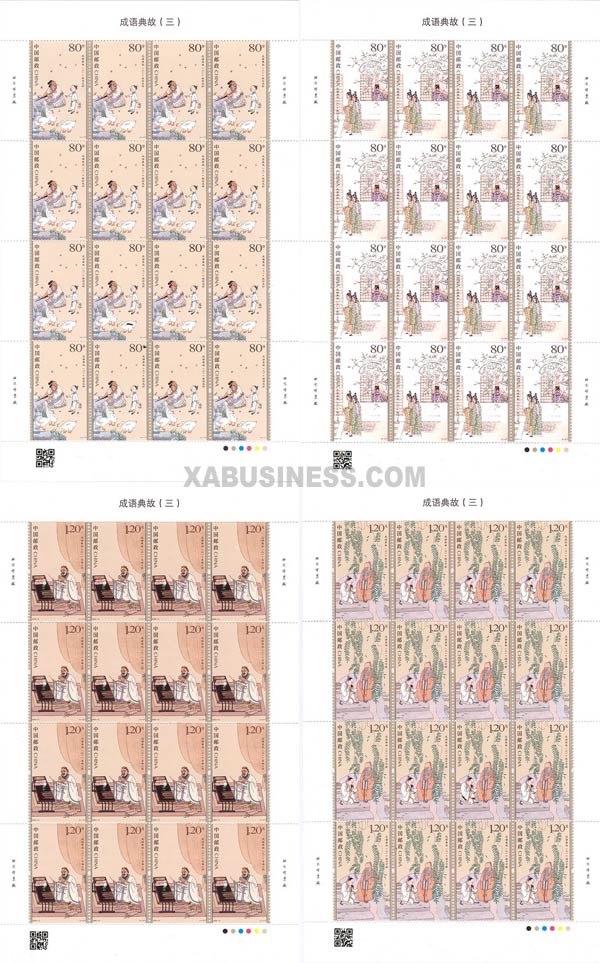

Technical details
Scott No: -Serial number: 2023-12
Values in set: 4
Date of issue: July 15, 2023
Denomination: 400 fen
Designer: Liu Jingui
Size of stamps: 30 * 50 mm
Perforation: 13.5
Sheet composition: 16
Size of sheet: 150 * 240 mm
Printing process: Photogravure
Printing House: Beijing Postage Stamp Printing Works
Themes: Culture, Literature,
Background
China Post scheduled the issuance of a set of special stamps themed Idiom Allusions (III) on July 15, 2023. The set contains 4 stamps, with their design themes named Grinding an Iron Pestle into a Needle, Standing in the Snow at Cheng’s Gate, Reading until the Cowhide Thongs Break Three Times and A Youth Worth Teaching respectively. The total face value of the complete stamp set is 4 yuan. The planned circulation volume is 7.08 million pieces for the 1st, 3rd, and 4th stamp designs, and 7.208 million pieces for the 2nd stamp design.Idioms are part of the long-standing historical culture of the Chinese nation and even more so treasures of the Chinese literary treasury. Idiom stories, on the other hand, feature vivid and concise language, distinct images, and possess humor and ethical significance, embodying extremely rich knowledge and truths. Many idioms originate from fables, myths and legends, and historical romances—these stories are not only vivid in plot but also profound in implication.
Grinding an Iron Pestle into a Needle comes from A Survey of Famous Places. In his childhood, the poet Li Bai gave up his studies because he found them difficult. On his way away from school, he happened to meet an old woman grinding an iron pestle into a needle. This incident deeply touched him, so he finally resolved to study diligently and eventually achieved great academic success. The idiom metaphorically means that as long as one has determination and is willing to put in effort, no matter how difficult a task is, it can be accomplished. It embodies the spirit of perseverance, persistence, and unwavering dedication.
Standing in the Snow at Cheng’s Gate is derived from The History of the Song Dynasty: Biography of Yang Shi. During the Northern Song Dynasty, Yang Shi, a famous philosopher who cared little about fame and fortune, gave up the opportunity to hold an official position and became a disciple of the renowned Neo-Confucian masters Cheng Hao and his brother Cheng Yi to study Neo-Confucianism. After completing his studies, he returned to the south to give lectures. After Cheng Hao passed away, Yang Shi went to visit Cheng Yi. When he saw that Cheng Yi was resting, he respectfully stood in the snow outside the courtyard, waiting for his teacher to wake up. This idiom represents the virtue of respecting teachers and valuing education, as well as the spirit of devout pursuit of knowledge.
Reading until the Cowhide Thongs Break Three Times is quoted from Records of the Grand Historian: Biography of Confucius. Confucius was extremely eager to learn; even in his later years, he persisted in studying The I Ching. He delved into the book repeatedly, and the cowhide thongs that bound the bamboo slips were worn out several times, forcing him to replace them with new ones before continuing to read. This idiom is used to metaphorically describe the spirit of diligent reading, assiduous academic pursuit, and unremitting study.
A Youth Worth Teaching is from Records of the Grand Historian: Biography of Marquis Liu. At the end of the Qin Dynasty, Zhang Liang helped an old man pick up and put on his shoes by the Yishui Bridge near Xiapi. Finally, he gained the old man’s recognition and was taught the art of war. The idiom implies that a young person is respectful and eager to learn, and has the potential to be nurtured.
The designs of this set of stamps are created using traditional Chinese Gongbi (meticulous brushwork) painting techniques, combining the rigorous rules of traditional Gongbi painting with the artistic charm of literati painting. The brushwork in the images is exquisite and concise, and the figures are depicted in a simple, classical style that vividly captures their spirits. Through lively and interesting visuals, the profound connotations of the idioms are expressed. This set of stamps was designed by Liu Jingui and printed using the photogravure technique by Beijing Stamp Printing Co., Ltd.
Share: 
Price List
Item location: China
Ships to: Worldwide
*Shipping (via registered air mail) is based on subtotal of order. See detials below.
* 1) for special items shipping and handling cost may be included. 2) Other fast shipping is available.
To special order, please let us know what you are looking for. We will help you to meet your unique interests.
Ships to: Worldwide
*Shipping (via registered air mail) is based on subtotal of order. See detials below.
| Order Subtotal | S & H |
| $0.01---$15.00 | US $5.00 |
| $15.01---$50.00 | US $6.00 |
| $50.01---$100.00 | US $7.00 |
| $100.01---$180.00 | US $8.00 |
| $180.01---over | US $9.00 |
To special order, please let us know what you are looking for. We will help you to meet your unique interests.


