

2026-10 Suzhou Gardens: Lion Grove Garden
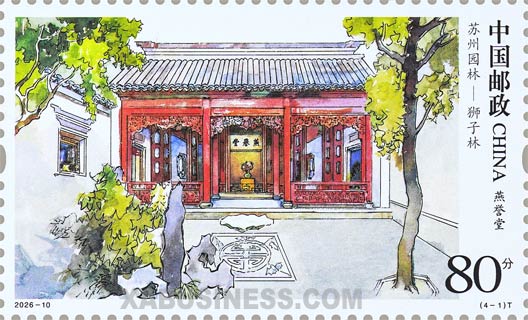
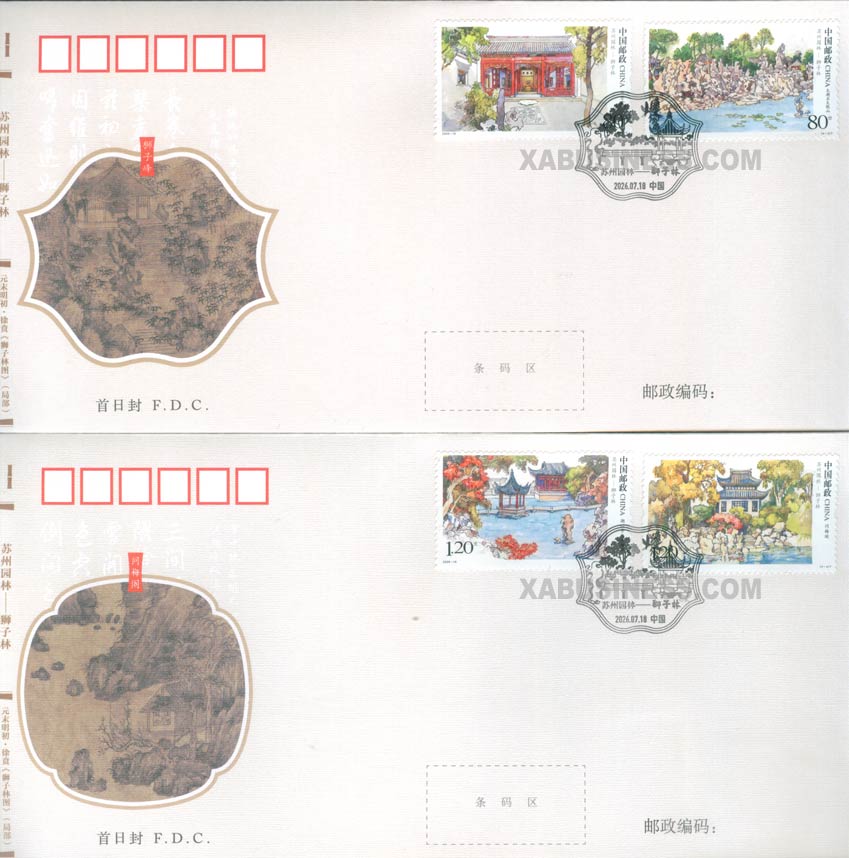
 (4-1), Yanyu Hall, 80 fen, 50 * 30 mm
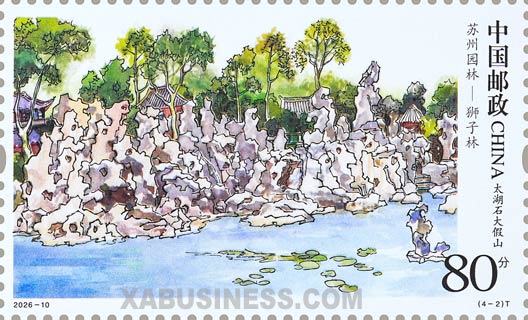 (4-2), Taihu Lake Rockery, 80 fen, 50 * 30 mm
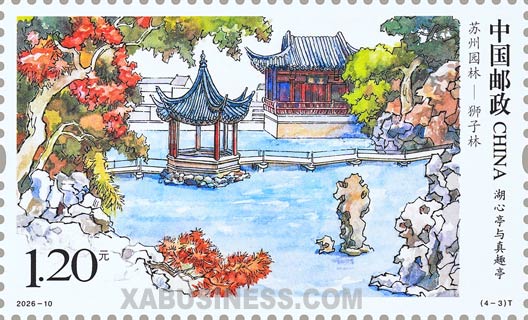 (4-3), Mid-Lake Pavilion and Zhenqu Pavilion, 120 fen, 50 * 30 mm
 (4-4), Wenmei Pavilion, 120 fen, 50 * 30 mm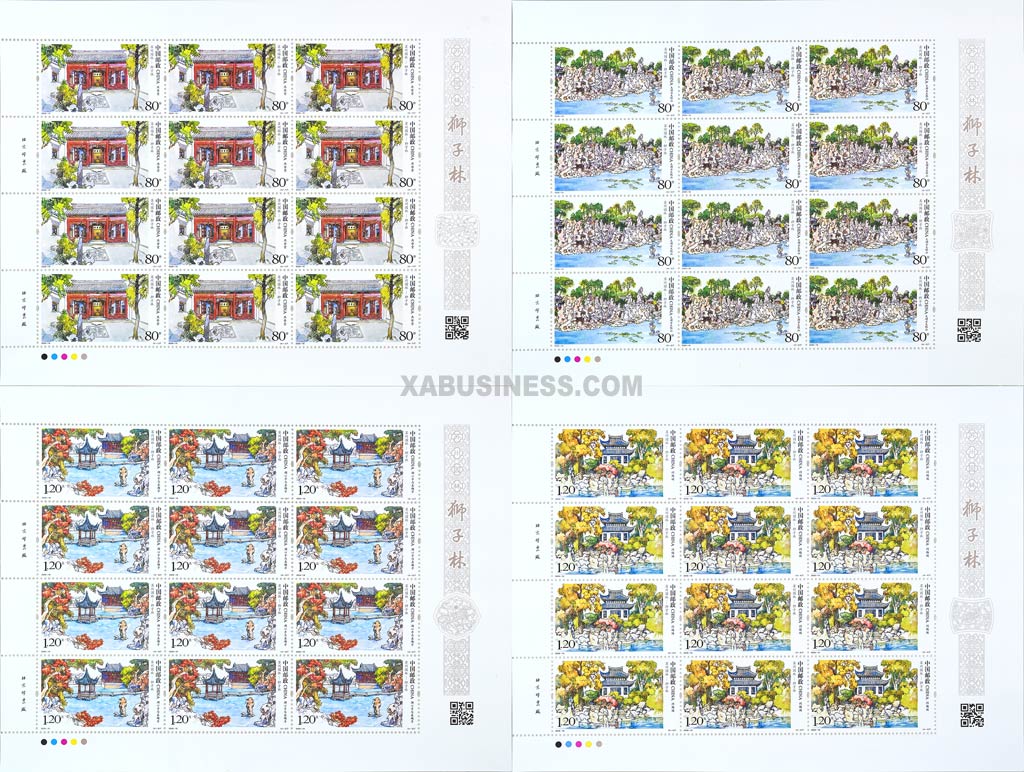

Technical details
Scott No: -Serial number: 2026-10
Values in set: 4
Date of issue: July 18th, 2026
Denomination: 400 fen
Designer: Zhang Anpu
Size of stamps: 50 * 30 mm
Perforation: 13
Sheet composition: 12
Sheet Size: 200 *150 mm
Printing process: Offset + Engraving
Printing House: Beijing Postage Stamp Works
Background
China Post plans to issue a set of four special stamps featuring The Lion Grove Garden – A Classical Suzhou Garden on July 18, 2026. The stamp designs are named: Yanyu Hall, Taihu Lake Rockery, Mid-Lake Pavilion and Zhenqu Pavilion, and Wenmei Pavilion.Suzhou classical gardens are outstanding representatives of Chinese garden art. Their history can be traced back to the Spring and Autumn period, with development through the Jin and Tang dynasties, prosperity during the Song dynasties, and a peak in the Ming and Qing periods. These gardens use mountains, water, flowers, and trees as carriers, pursuing poetic and pictorial artistic conceptions. Within limited spaces, they create rich and profound artistic worlds and are regarded as important symbols of traditional Chinese culture.
The Lion Grove Garden was first built in 1342 during the Yuan Dynasty (the second year of the Zhizheng era). Its name comes from the lake Taihu stones within the garden, whose peaks resemble a group of lions in form and posture. Over centuries of construction and renovation, the garden has developed a spatial layout that integrates rockeries, water features, architecture, and flora. This stamp set selects four of the most representative scenes, presenting the garden’s rich and diverse artistry and its profound cultural heritage through the interplay of architecture, rock formations, water, and plants.
The first stamp depicts Yanyu Hall, which is the main hall of the Lion Grove Garden and the largest and highest-ranked building in the garden. Its name is taken from the Book of Songs – Xiaoya – Chexia: “Feasting and praising, delighting without end,” signifying harmony and joy among host and guests. Since ancient times, this has been a key venue for the garden’s owners to host banquets and gatherings, embodying the traditional Chinese garden’s spirit of hospitality and humanistic sentiment.
The second stamp depicts the Taihu Lake Rockery. The winding rock formations are the most renowned feature of the Lion Grove Garden. The Taihu stones in the garden are varied and colorful, with ridges and peaks rising and falling. Seen from a distance, they resemble a group of playing lions. Among them, the Grand Rockery is the core of the garden’s landscape and an important representative of classical Chinese rockery art. Layers of piled Taihu stones form a winding and deep spatial experience, showcasing the ancient principle of “making the artificial appear real.” Shizi Peak, atop the rockery, is the visual focus of the entire garden and symbolizes the unique spirit of the Lion Grove Garden.
The third stamp depicts the Mid-Lake Pavilion and Zhenqu Pavilion. In classical Chinese gardens, pavilions serve not only as viewing platforms but also as integral elements of the landscape. The Mid-Lake Pavilion and Zhenqu Pavilion in the Lion Grove Garden are connected by water—one still, one dynamic—together forming the most layered and varied landscape space in the garden. Zhenqu Pavilion is named after the plaque “Zhenqu” (True Delight) inscribed by Emperor Qianlong of the Qing Dynasty, making it a significant witness to the intersection of imperial culture and garden art. The Mid-Lake Pavilion stands in the water, harmonizing with the surrounding rocks and trees. The overall scene is elegant and serene, revealing the Lion Grove Garden’s unique blend of literati refinement and imperial grandeur.
The fourth stamp depicts Wenmei Pavilion, located on the higher ground of the western part of the garden. Its name derives from the Zen Buddhist story of “Mazu Asking About Plum Blossoms,” which conveys philosophical reflections on seeking truth and enlightenment. Plum trees are planted in front of the pavilion, creating a plum grove landscape. The name, spatial arrangement, and decorative details all reflect the deep integration of Zen philosophy and literati aesthetics.
The stamp designs employ the classic pen-and-watercolor technique, combining the structural lines of pen with light, clear washes. The lines are firm yet gentle, with a measured density. The colors are refined and subtle, with a watery transparency that conveys a sense of Jiangnan literati artistic conception. Through pen outlines of rocks and buildings, and light washes of the garden’s misty atmosphere, the stamps create a visual experience of shifting scenes and distant moods—revealing the unique charm of the Lion Grove Garden’s rockery formations, winding streams, and tranquil, lively spaces.
The stamp set is designed by Zhang Anpu, edited by Li Jinwei, and printed using a combination of offset and engraving techniques.
Share: 
Price List
Item location: China
Ships to: Worldwide
*Shipping (via registered air mail) is based on subtotal of order. See detials below.
* 1) for special items shipping and handling cost may be included. 2) Other fast shipping is available.
To special order, please let us know what you are looking for. We will help you to meet your unique interests.
Ships to: Worldwide
*Shipping (via registered air mail) is based on subtotal of order. See detials below.
| Order Subtotal | S & H |
| $0.01---$15.00 | US $5.00 |
| $15.01---$50.00 | US $6.00 |
| $50.01---$100.00 | US $7.00 |
| $100.01---$180.00 | US $8.00 |
| $180.01---over | US $9.00 |
To special order, please let us know what you are looking for. We will help you to meet your unique interests.


