

2018-21 The 24 Solar Terms (3)
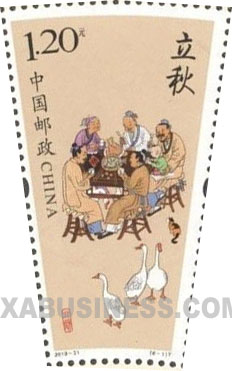
 (6-1), Autumn begins, 120 fen, 30.76, 48 mm
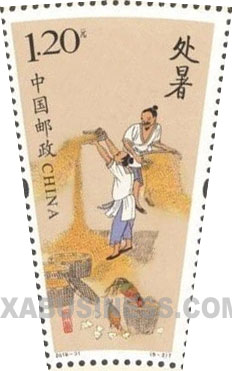 (6-2), Stopping the heat, 120 fen, 30.76, 48 mm
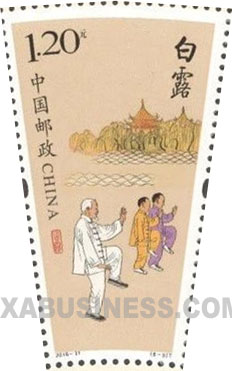 (6-3), White dews, 120 fen, 30.76, 48 mm
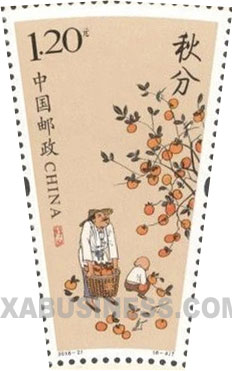 (6-4), Autumn Equinox, 120 fen, 30.76, 48 mm
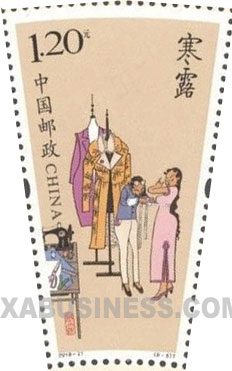 (6-5), Cold dews, 120 fen, 30.76, 48 mm
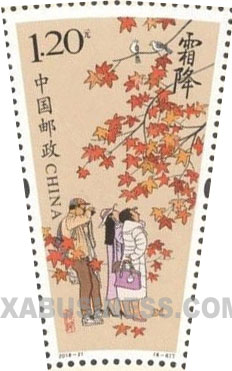 (6-6), Hoar-frost falls, 120 fen, 30.76, 48 mm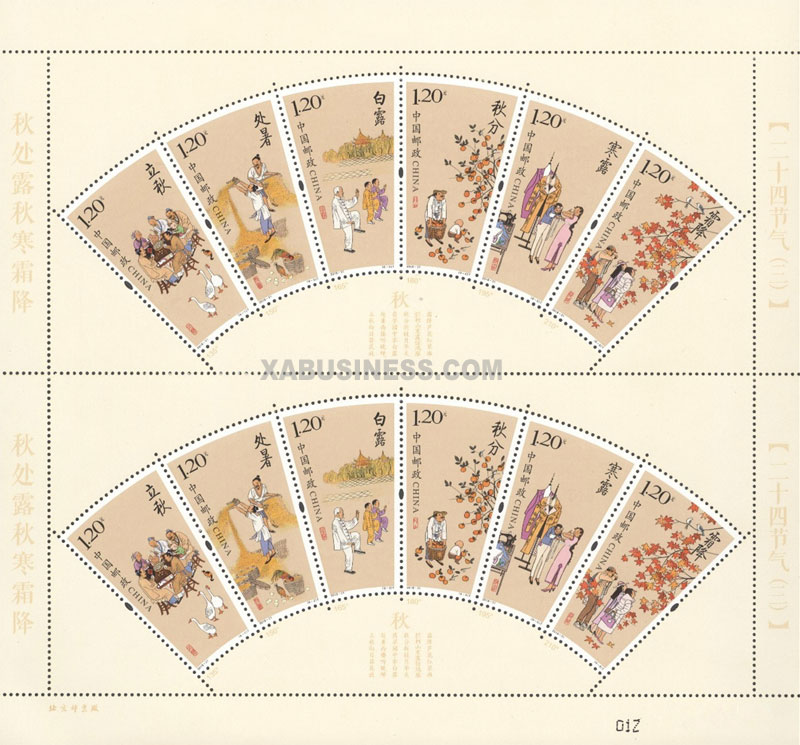

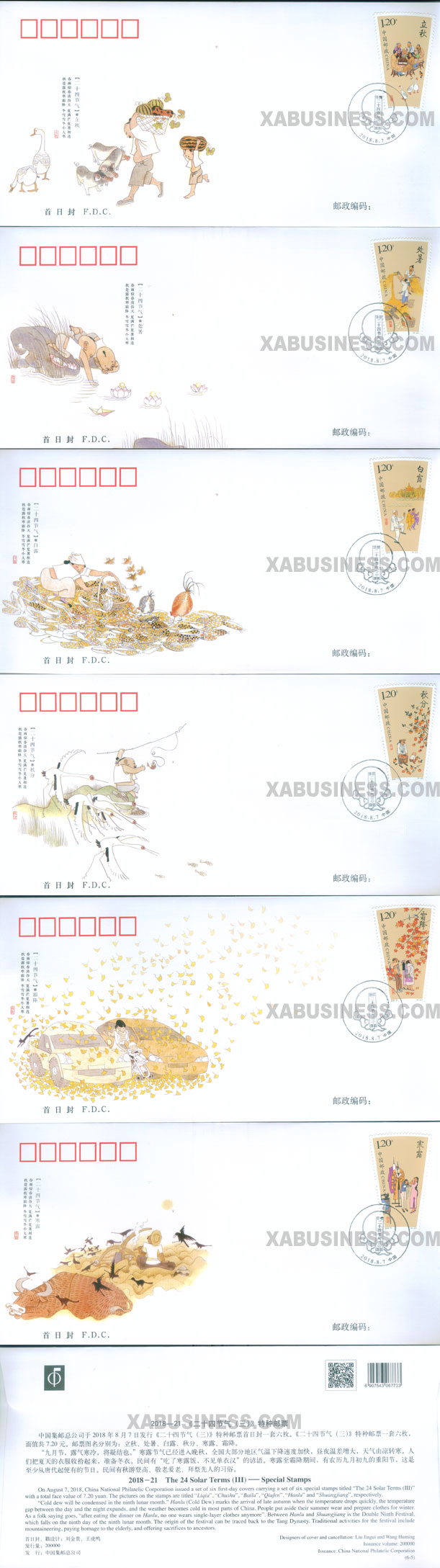
Technical details
Scott No: -Serial number: 2018-21
Values in set: 6
Date of issue: August 7, 2018
Denomination: 720 fen
Designer: Liu Jingui, Wang Huming
Size of stamps: Long arc 30.76 mm, straight edge 48 mm (fanshaped)
Perforation: 13
Sheet composition: 12 (2 sets)
Sheet Size: 196 * 185 mm
Printing process: Photogravure
Printing House: Beijing Stamp Printing Works
Themes: Culture,
Background
The 24 Solar Terms is a knowledge system and social practice through which the Chinese people understand astronomical phenomena, phenology, seasonal changes, and the laws governing nature’s transformations. Ancient Chinese divided the sun’s annual orbital path into 24 equal segments, with each segment corresponding to one solar term; collectively, these are known as the "24 Solar Terms". Serving as a crucial carrier of Chinese cultural identity, the 24 Solar Terms also stand as a vivid testament to the diversity of human culture. In 2016, they were officially inscribed on UNESCO’s Representative List of the Intangible Cultural Heritage of Humanity."24 Solar Terms (III)" is a set of special stamps issued by China Post on August 7, 2018, to commemorate the 24 Solar Terms, with the issue number 2018-21. The full set has a total face value of 7.20 yuan and a planned circulation of 10,759,300 sets.
The stamps in the "24 Solar Terms (III)" set are titled after six solar terms: Liqiu (Beginning of Autumn), Chushu (End of Heat), Bailu (White Dew), Qiufen (Autumn Equinox), Hanlu (Cold Dew), and Shuangjiang (Frost’s Descent). Each stamp design depicts people’s typical activities during the corresponding solar term.
Liqiu (Beginning of Autumn) is the 13th solar term. A long-standing folk custom during Liqiu is "tieta biaoshen" (literally "sticking autumn fat"), where people usually replenish their bodies by eating rich, hearty delicacies. The stamp captures a warm scene of a family sitting together to partake in this tradition.
Chushu (End of Heat) is the 14th solar term. Starting from Chushu, the weather—warm days and cool nights—creates favorable conditions for crop growth, and crops in some regions begin to be harvested. The stamp portrays a harvest scene where farmers are drying their crops.
Bailu (White Dew) is the 15th solar term. During this period, the temperature difference between day and night reaches its annual peak, making it an ideal time for moderate exercise to enhance physical fitness. The stamp shows an elderly person and a child practicing martial arts (such as tai chi) for health.
Qiufen (Autumn Equinox) is the 16th solar term. After Qiufen, each year enters the busiest phase of autumn agricultural work. By this time, persimmons in some areas have ripened. The stamp depicts an elderly person leading children to pick persimmons, implying "peace in all matters" (as the Chinese character for "persimmon" (shi) shares the same pronunciation as the character for "all matters" (shi)).
Hanlu (Cold Dew) is the 17th solar term. During Hanlu, most parts of China have entered autumn, and preparing to add thick clothing to one’s wardrobe becomes a common daily activity. The stamp presents a scene of people having clothes tailored to their measurements.
Shuangjiang (Frost’s Descent) is the 18th solar term. After Shuangjiang, the leaves of trees like maples and smoke trees begin to turn reddish-yellow under the touch of autumn frost, creating a spectacular sight like flaming clouds or brocade. This breathtaking scenery attracts people to linger and admire. The stamp depicts visitors enjoying the red autumn leaves.
The "24 Solar Terms (III)" stamps adopt the form of small-scale traditional Chinese paintings, focusing on themes such as phenology, folk customs, and agricultural work. They illustrate the changes of each solar term as seasons cycle, reflecting the wisdom, culture, and ideology that have been continuously passed down in Chinese culture for thousands of years, and combining scientific rigor with cultural charm. With light brushwork, free-spirited expression of emotions, unique composition, and a concise, lively style, the stamps organically integrate art with daily life.
Share: 
Price List
Item location: China
Ships to: Worldwide
*Shipping (via registered air mail) is based on subtotal of order. See detials below.
* 1) for special items shipping and handling cost may be included. 2) Other fast shipping is available.
To special order, please let us know what you are looking for. We will help you to meet your unique interests.
Ships to: Worldwide
*Shipping (via registered air mail) is based on subtotal of order. See detials below.
| Order Subtotal | S & H |
| $0.01---$15.00 | US $5.00 |
| $15.01---$50.00 | US $6.00 |
| $50.01---$100.00 | US $7.00 |
| $100.01---$180.00 | US $8.00 |
| $180.01---over | US $9.00 |
To special order, please let us know what you are looking for. We will help you to meet your unique interests.


