

2018-18 Fruits (3)
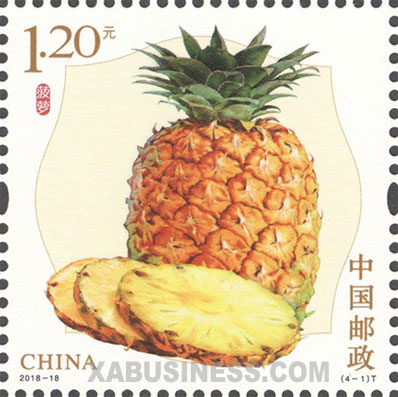
 (4-1), Pineapple, 120 fen, 33 * 33 mm
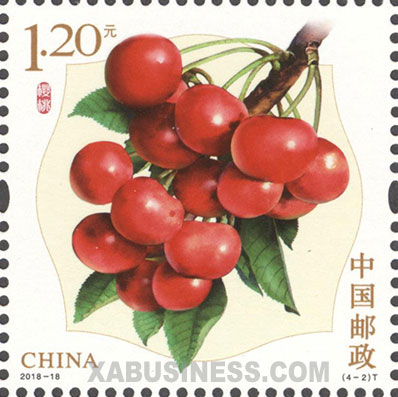 (4-2), Cherry, 120 fen, 33 * 33 mm
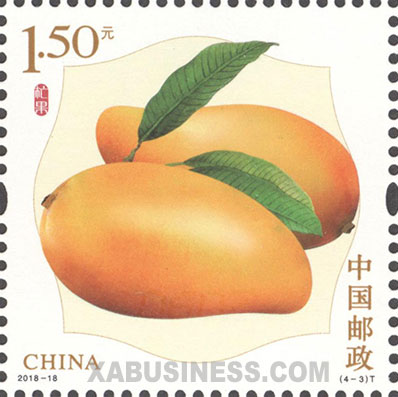 (4-3), Mango, 150 fen, 33 * 33 mm
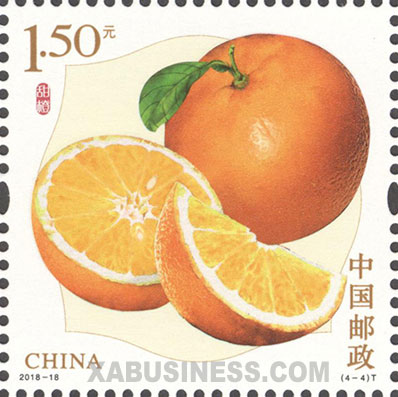 (4-4), Orange, 150 fen, 33 * 33 mm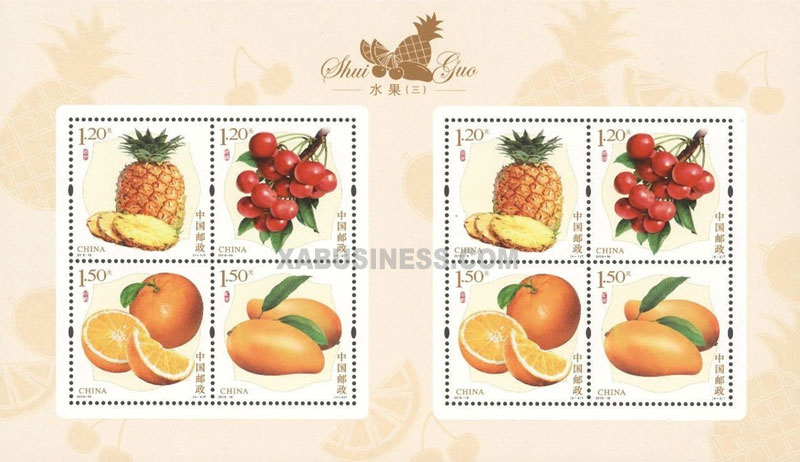

Technical details
Scott No: -Serial number: 2018-18
Values in set: 4
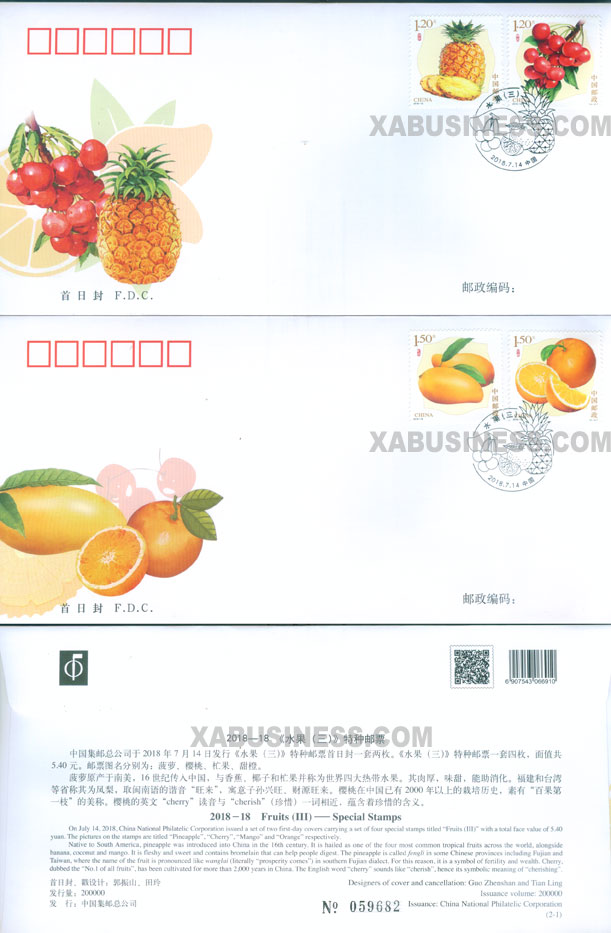
Date of issue: July 14, 2018
Denomination: 540 fen
Designer: Guo Zhenshan
Size of stamps: 33 * 33 mm
Perforation: 13.5 * 13
Sheet composition:
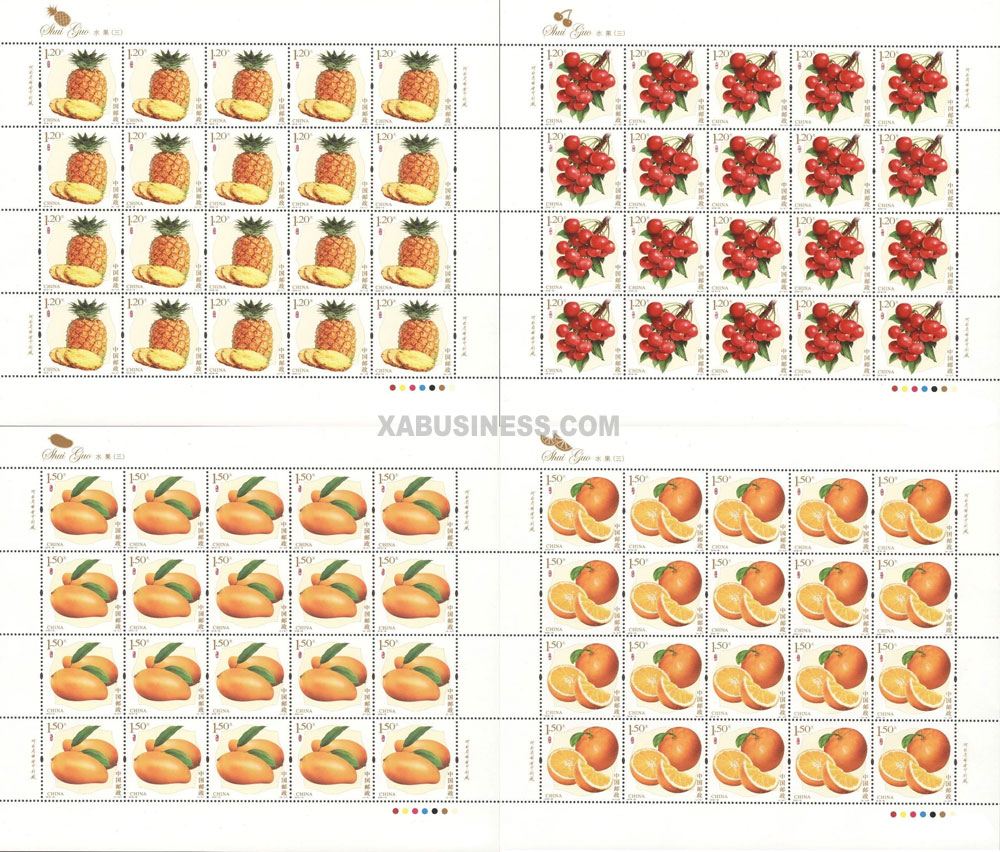
20 for Sheet I;
8 for Sheet II (2 Stamp Sets)
Size of sheet:
200 * 170 mm for Sheet I;
190 * 110 mm for Sheet II
Printing process: Offset
Printing House: Henan Provincal Postage Stamp Printing Works
Background
Fruits (III) is a set of special stamps issued by China Post on July 14, 2018, with the stamp issue number 2018-18, aiming to showcase China’s rich fruit resources. The full set contains 4 stamps, depicting the images of pineapple, cherry, mango, and sweet orange respectively. Among them, the naming of "mango" follows the standard word form recommended by reference books such as Modern Chinese Dictionary.The background of the stamps adopts a traditional Chinese special window pattern design, integrating Chinese and Western styles. Some fruit patterns are shown in a cut-open form to present characteristics from different perspectives. This stamp series continues the release pattern of being issued every other year and the grouping format of Fruits (I) and Fruits (II), showcasing common fruit varieties widely cultivated in China.
Pineapple
As one of the tropical fruits, pineapple was introduced to China from Brazil in the 16th century. In China, it is mainly distributed in Fujian, Guangdong, Guangxi, Hainan, Yunnan and other regions, and is one of the four famous fruits in Lingnan (the southern region south of the Five Ridges). In Minnan dialect, "pineapple" has a homophonic sound with "prosperity coming", implying the arrival of financial prosperity and lasting prosperity.
Cherry
The English pronunciation of "cherry" is similar to that of the word "cherish", so cherry implies "treasure" or "cherish". In China, cherries are mainly produced in Liaoning, Hebei, Shaanxi, Gansu, Shandong, Henan, Jiangsu, Zhejiang, Jiangxi, Sichuan and other provinces.
Mango
Mango is a tropical fruit originally from India. In Records of the Western Regions of the Great Tang, it is stated that "the 'Anboluo' fruit is cherished in the world"—"Anboluo" is the ancient name of mango. After being introduced to China, it was also called "Wangguo" (literally "expectation fruit"), which implies "hope". In China, mango is mainly distributed in Yunnan, Guangxi, Guangdong, Hainan, Fujian, Taiwan, Sichuan and other regions.
Sweet Orange
Sweet orange, also known as "fragrant orange", is mainly distributed in Hubei, Hunan, Jiangsu, Guizhou, Guangxi, Yunnan, Gansu, Shaanxi and other regions in China. The Chinese character "Cheng" (orange) is homophonic with "Cheng" (sincerity) and "Cheng" (success), so it implies "sincerity from the heart" and "fulfillment of one’s wishes".
In terms of expression techniques, this set of stamps breaks through traditional methods and adopts a comprehensive approach combining watercolor painting, partial ultra-realism and partial freehand brushwork, making the images concise, elegant, fresh and natural. In terms of craftsmanship, during the printing process of this set of stamps, fragrance ink was added according to the unique fruity aroma of the four kinds of fruits. The offset printing process with partial embossing was used, which makes the fruit shapes on the stamps three-dimensional and full, with bright colors and vivid images.
The Cherry stamp adopts a typical watercolor wet-on-wet technique, completed in one go while the paper is still wet. The colors are simple with smooth transitions, showing the bright and crystal-clear texture of cherries. The overall color of the leaves is bright, and the leaf veins are painted in the meticulous brushwork style of traditional Chinese painting, which makes their structure clearer and forms a sharp contrast with the fruits.
For the Pineapple stamp, a combination of wet and dry techniques was used based on the texture characteristics of pineapple peel. This is also the most difficult one to depict among the 4 stamps in the set. If only focusing on applying watercolor techniques, it would be difficult to show the structure of the pineapple; if handled too delicately, it would easily lose its artistic appeal. Finally, this stamp adopted a style that is bold and rough in general while exquisite in details, with exaggerated handling of reflections, thus achieving the expected effect. The sliced pineapple flesh was painted in one stroke using the conventional fruit expression technique, creating a rhythmic change compared with the overall image of the pineapple.
The difficulty in depicting the Sweet Orange stamp lies in the orange peel—it has no luster but has special granular characteristics with layers overlapping. There is no better way to depict it than combining wet and dry techniques. Opaque gouache pigments were added to the details of the highlight parts to highlight the granular effect of the peel. The cut orange flesh has a fine structure and fresh colors.
The peel texture of the mango on the Mango stamp has a moderate luster. When designing this stamp, more emphasis was placed on grasping its structure and handling the highlight parts. The leaves of the "mango" were painted using the same technique as the leaves of the "cherry", avoiding the monotony caused by the regular shape of the fruit.
The background of the stamps adopts traditional Chinese special window patterns, creating a desirable warm life scene. It forms a Chinese-Western integrated design style together with the square shape of the stamp surface. A light yellow color sets off the main subject of the stamp surface either by contrast or unity, while also creating a fresh and elegant color effect. Both the Pineapple and Orange stamps include cut-open displays, which show the characteristics of the fruits from different perspectives and enhance the warm atmosphere of the images. The warm and bright color tones and delicate depictions make this set of stamps emit the unique charm of fruits and convey warm blessings.
Share: 
Price List
Item location: China
Ships to: Worldwide
*Shipping (via registered air mail) is based on subtotal of order. See detials below.
* 1) for special items shipping and handling cost may be included. 2) Other fast shipping is available.
To special order, please let us know what you are looking for. We will help you to meet your unique interests.
Ships to: Worldwide
*Shipping (via registered air mail) is based on subtotal of order. See detials below.
| Order Subtotal | S & H |
| $0.01---$15.00 | US $5.00 |
| $15.01---$50.00 | US $6.00 |
| $50.01---$100.00 | US $7.00 |
| $100.01---$180.00 | US $8.00 |
| $180.01---over | US $9.00 |
To special order, please let us know what you are looking for. We will help you to meet your unique interests.


