

2026-6 Traditional Chinese Musical Instruments - Percussion Instruments
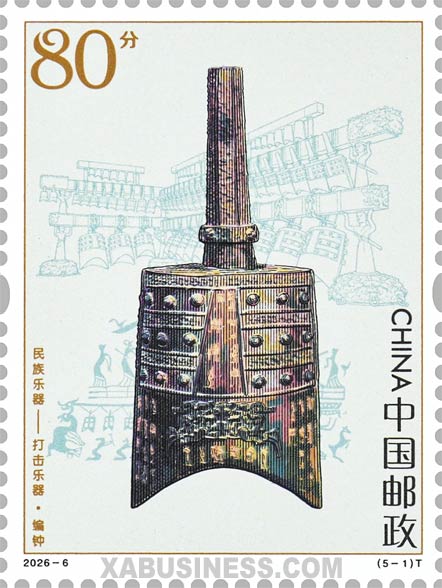
 (5-1), Bianzhong (Bronze Chime Bells), 80 fen, 30 * 40 mm
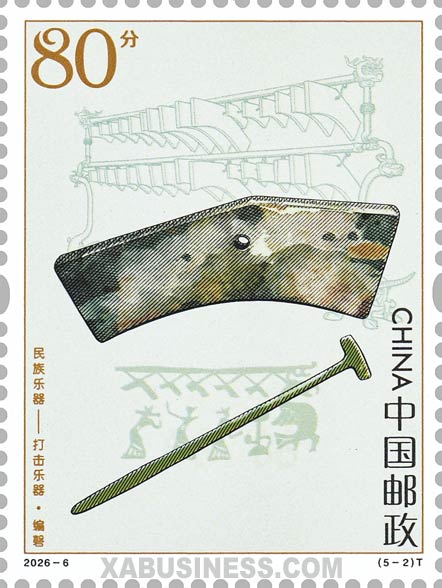 (5-2), Bianqing (Chime Stones), 80 fen, 30 * 40 mm
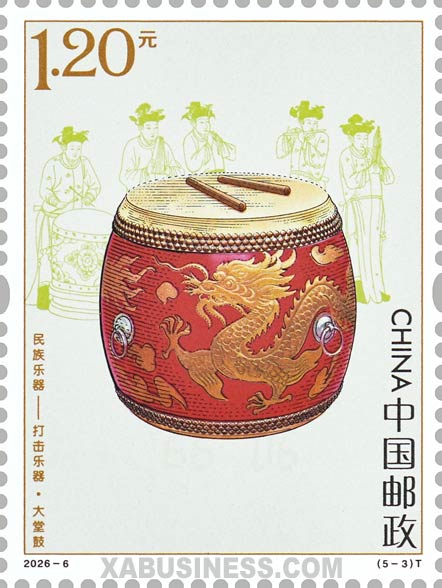 (5-3), Large Tanggu (Large Chinese Drum), 120 fen, 30 * 40 mm
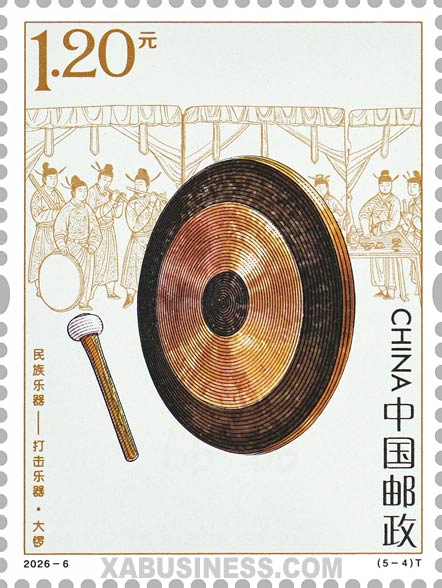 (5-4), Large Luo (Large Gong), 120 fen, 30 * 40 mm
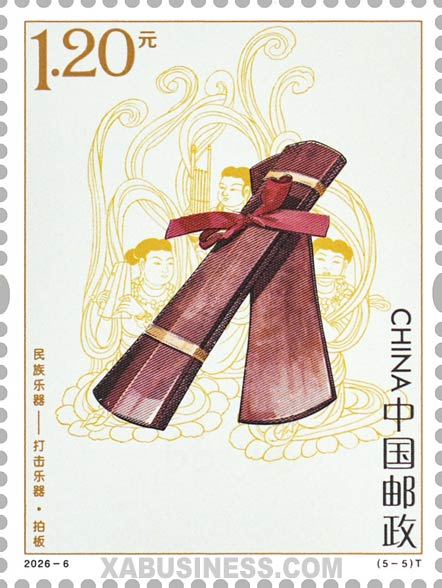 (5-5), Paiban (Clappers), 120 fen, 30 * 40 mm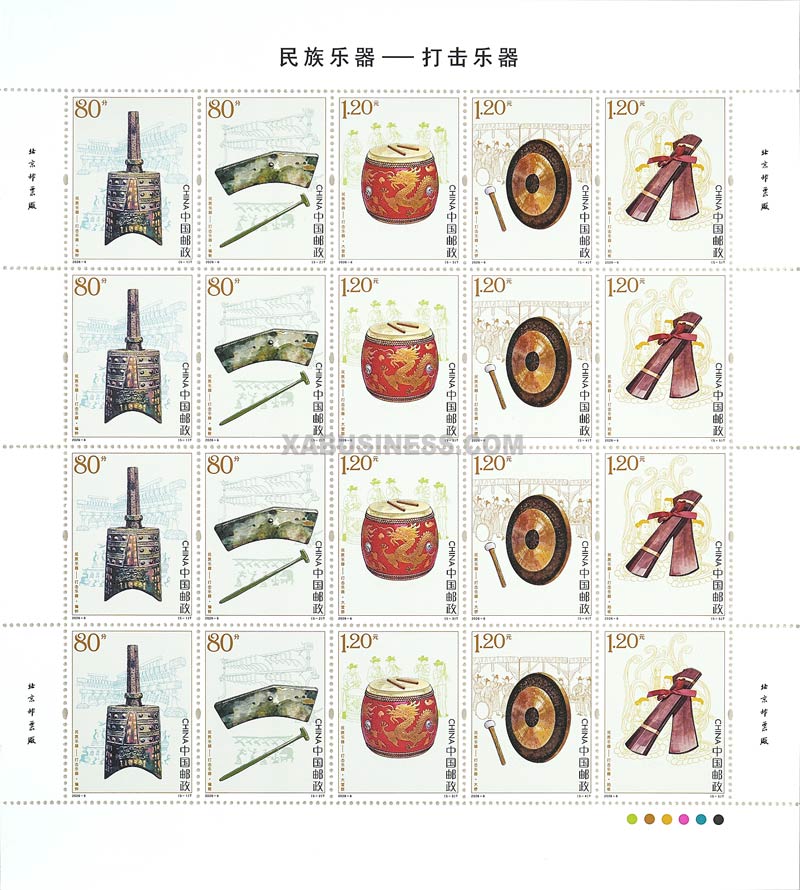

Technical details
Scott No: -Serial number: 2026-6
Values in set: 6
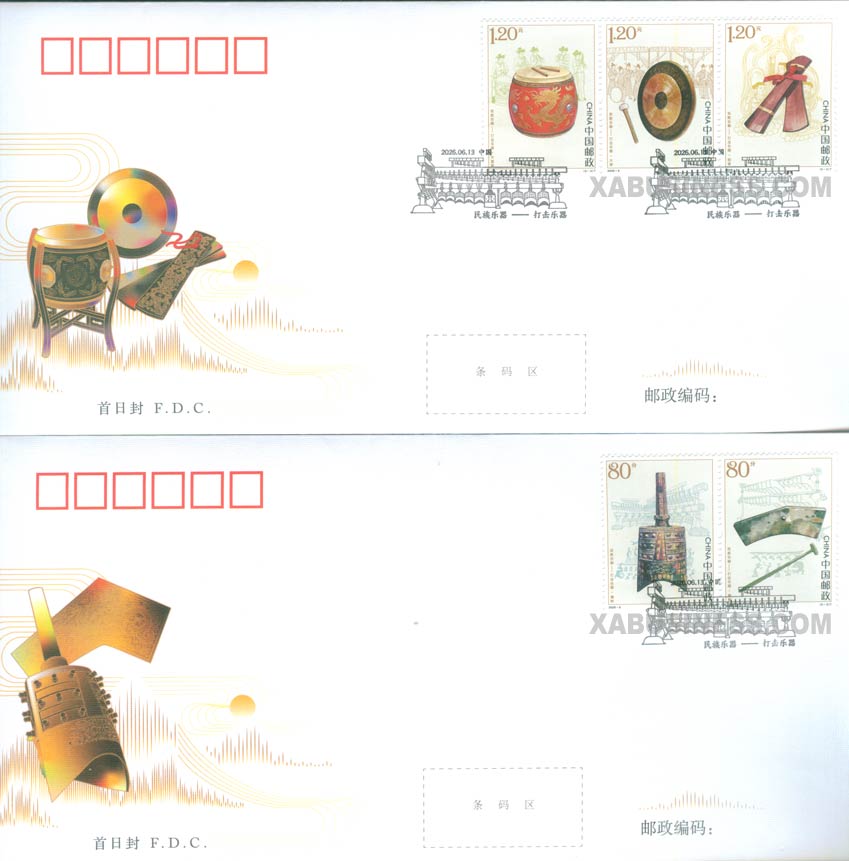
Date of issue: June 13th, 2026
Denomination: 520 fen
Designer: Shen Jiahong, Shang Ying
Size of stamps: 30 * 40 mm
Perforation: 13.5
Sheet composition: 20 (4 sets)
Size of sheet: 180 * 200 mm
Printing process: Offset + engraving
Printing House: Beijing Postage Stamp Printing Works
Themes: Culture,
Background
China Post will issue a set of five special stamps titled "Traditional Chinese Musical Instruments – Percussion Instruments" on June 13, 2026. The stamp designs are named: Bianzhong (Bronze Chime Bells), Bianqing (Chime Stones), Large Tanggu (Large Chinese Drum), Large Luo (Large Gong), and Paiban (Clappers). The total face value of the set is 5.20 yuan, with a planned issuance quantity of 3.92 million sets.Traditional Chinese musical instruments are generally divided into four categories: wind, percussion, plucked strings, and bowed strings. Percussion instruments produce sound by striking, shaking, rubbing, or scraping. Some percussion instruments can not only create rhythm but also produce melody and harmony, making them an indispensable part of traditional Chinese art.
Bianzhong (Bronze Chime Bells) are cast from bronze. They were first made and used in China, emerging in the Zhou Dynasty and flourishing from the Spring and Autumn period to the Qin and Han dynasties. A set consists of flat, oval bells of different sizes suspended from a wooden frame according to pitch, and struck with T-shaped wooden mallets and long sticks. Each bell can produce a fixed pitch. The stamp background features the Bianzhong bells of Marquis Yi of Zeng, with the intact frame and bells hung in orderly fashion, demonstrating a high combination of science and art. As bronze percussion instruments, the bianzhong produce a grand, rich, pure sound with a long, lingering resonance. The music played is solemn, majestic, and magnificent, creating a harmonious ritual atmosphere.
Bianqing (Chime Stones) are traditional Han Chinese percussion instruments, usually made of limestone or marble. Different sizes of stone chimes are suspended from a wooden frame and struck with small mallets. The lower part of the stamp background uses a detail from the Warring States period "Bronze Vessel with Patterns of Banquet, Fishing, Hunting, and Warfare." The painting shows an entire band performing beneath a set of chime bells and chime stones, vividly depicting a lively dance and music scene. The bianqing produce a crisp, bright, clear sound with strong penetration, as ethereal and distant as a clear mountain spring. The music sounds elegant and refined, and when combined with bianzhong, they create a "resonance of metal and stone," offering a tranquil and far-reaching auditory enjoyment.
Large Tanggu (Large Chinese Drum) has two heads covered with hide and a wooden frame. According to different shapes, it is also called "flowerpot drum" or "vat drum," as well as "big drum" or "Chinese bass drum." When played, it is placed on a drum stand and struck with two wooden drumsticks. It is often used in Chinese instrumental ensembles and as accompaniment for opera, song, and dance music. The stamp background features a detail from the "Musicians Mural" from the Zhang Wen's tomb in Xuanhua, Liao Dynasty. The mural shows seven people; the leftmost person is beating a large drum while wearing a yellow robe with dots. The round drum base is placed on the ground, and the large drum rests on the base. The drum body is red with painted peonies, and the hide tacks are clearly visible. The large drum has a large head, producing a deep, broad, and powerful sound. The music played is extremely impactful, with the booming drum beats often stirring excitement, adding a rich heaviness to the whole piece and endowing it with a sonorous rhythm and a majestic, earth-shaking momentum.
Large Luo (Large Gong) is also known as "copy gong," "sieve gong," or "black gong." Its rim and center are not polished and appear black. It comes in three sizes: large, medium, and small. The large gong has a diameter of over 80 cm and is played while suspended from a wooden frame. The stamp background uses a detail from a brick relief of a banquet and music scene from a Song Dynasty tomb in Longxi. The scene depicts a zaju (comic drama) performance. On the left side is the accompanying band, with one person holding a gong while standing. The gong is huge, with a smooth surface and holes at the edge for stringing. The musician holds the gong with his right hand (its bottom touching the ground) and a small mallet in his left hand, ready to strike. The large gong is an idiophone producing a resonant, rich, deep sound with a long, lingering ring. The music played has a strong sense of shock and pressure, yet in celebrations it can also enhance a joyous, warm, and festive atmosphere, highly effective at evoking emotion.
Paiban (Clappers) are also called "tanban" because they are often made of rosewood. The number of boards in the clappers varied over different dynasties according to purpose. Modern clappers generally consist of three boards: two forming the front set and one forming the back set. The boards have holes through which a string passes. When playing, the left hand holds the base board and strikes it against the front two boards to produce sound. They are widely used in folk instrumental ensembles and various opera accompaniment bands. The stamp background features a detail from the "Transformed Children and Attendants Music" painting in Cave 16 of the Yulin Grottoes, Five Dynasties period. Three children each kneel on a lotus seat, soaring through the void. The child on the left holds clappers, playing intently. The clappers produce a firm, short, crisp, and bright sound. The music played is rhythmically distinct and clean. They have no fixed pitch and primarily serve to lead the rhythm and direct the band. In ensemble playing, the clear sound of the clappers balances the richness of the drums and gongs, making the whole melody clearer and more orderly with proper tension.
The entire set continues a series design style, closely adhering to the core theme of "inheriting ritual music civilization, showing changes across past and present." The foreground focuses on images of the traditional instruments themselves, while the background uses elegant line drawings to present classic instrument images from ancient paintings and museum artifacts. Thus, within a small space, the stamps integrate ancient and modern elegance, creating a cultural atmosphere of harmonious ritual music and a dialogue across time, vividly interpreting the continuous inheritance and contemporary renewal of Chinese ritual music civilization.
The stamps incorporate AR technology. By scanning the stamps with a corresponding app, viewers can hear the music played on the five instruments, breaking the limitations of static viewing and achieving a multi-dimensional fusion of images, instruments, and sound, enriching the stamp collecting experience.
The stamp set is printed by Beijing Stamp Printing Co., Ltd. using the combined offset and engraving process. The images are delicate, the colors rich, and the transitions between background and decorative patterns natural. The engraved lines focus on the main body of the percussion instruments, making their outlines clear and their three-dimensionality strong. The relief texture can be clearly felt by touch. The engraving process perfectly blends the material characteristics, craftsmanship, and cultural connotations of the instruments, enhancing both anti-counterfeiting performance and the stamps' unique charm.
The stamp set was designed by Shen Jiahong and Shang Ying, edited by Wen Wenya, and printed by Beijing Stamp Printing Co., Ltd. using the combined offset and engraving process.
Share: 
Price List
Item location: China
Ships to: Worldwide
*Shipping (via registered air mail) is based on subtotal of order. See detials below.
* 1) for special items shipping and handling cost may be included. 2) Other fast shipping is available.
To special order, please let us know what you are looking for. We will help you to meet your unique interests.
Ships to: Worldwide
*Shipping (via registered air mail) is based on subtotal of order. See detials below.
| Order Subtotal | S & H |
| $0.01---$15.00 | US $5.00 |
| $15.01---$50.00 | US $6.00 |
| $50.01---$100.00 | US $7.00 |
| $100.01---$180.00 | US $8.00 |
| $180.01---over | US $9.00 |
To special order, please let us know what you are looking for. We will help you to meet your unique interests.


