

2011-13 60th Anniv. of Peaceful Liberation of Tibet
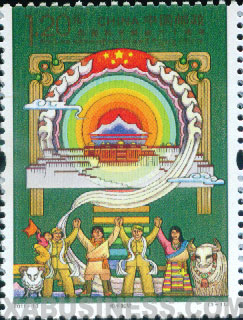
 (3-1), Peaceful Liberation, 120 fen, 30 * 40 mm
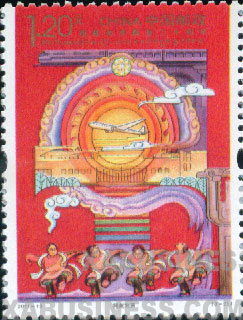 (3-2), Developing, 120 fen, 30 * 40 mm
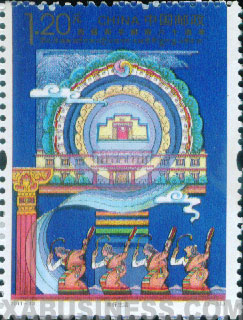 (3-3), Good Life, 120 fen, 30 * 40 mm
Technical details
Scott Number: -Serial number: 2011-13
Values in set: 3
Denomination: 360 fen
Date of issue: May 23, 2011
Size of stamp: 30 * 40 mm
Perforation: 13.5
Sheet composition: 12
Size of Sheet: 150 * 190 mm
Designer: Ye Xingsheng
Printing process: Photogravure
Printer: Beijing Postage Stamp Printing House
Themes: Anniversary,
Background
On May 23, 2011, the commemorative stamp "60th Anniversary of the Peaceful Liberation of Tibet" (catalog number 2011-13) was officially issued, coinciding with the anniversary of the signing of the "Seventeen-Point Agreement" in 1951, marking the 60th anniversary of the peaceful liberation of Tibet. The set consists of three stamps, each with a face value of 1.20 yuan, for a total face value of 3.60 yuan. The stamps were designed by Ye Xingsheng and printed by Beijing Stamp Printing Works using the photogravure process.The three stamps follow a narrative arc: historical turning point, construction and takeoff, and a happy life for the people. They review the historic milestone of Tibet's peaceful liberation, showcase the historic leap in Tibet's social system over the past sixty years, the continuous development of transportation and the economy, and the new outlook of people of all ethnic groups living in peace and contentment, embodying the theme of ethnic unity and shared prosperity. The stamp designs draw on the composition of traditional Tibetan Thangka paintings and incorporate numerous cultural symbols of the snowy plateau.
Stamp Designs and Historical Background:
Peaceful Liberation
Image: At the center is the Potala Palace, with the national emblem above, rainbow clouds, and a white hada scarf falling through the air; below, People's Liberation Army soldiers and Tibetan compatriots join hands in celebration, with yak and dove of peace motifs nearby.
History: On May 23, 1951, the "Agreement of the Central People's Government and the Local Government of Tibet on Measures for the Peaceful Liberation of Tibet" was signed, marking the peaceful liberation of Tibet, which was then incorporated into the great family of the motherland, opening a new era in Tibetan history.
Significance: Documents a landmark historical event, symbolizing ethnic unity and the new dawn for the snowy plateau.
Leapfrog Development
Image: The Lhasa Gonggar Airport building is at the center, with modern transportation elements such as airplanes, trains, and highways, with snowy mountains and auspicious clouds in the background, and Tibetan compatriots joyfully performing the Guozhuang dance below.
History: After the peaceful liberation, Tibet continued to advance infrastructure development, opening up external transportation links and vigorously developing modern industries, achieving leapfrog economic and social development.
Significance: Represents the achievements of modernization, reflecting the new pattern of openness and vigorous development on the plateau.
Better Life
Image: Traditional Tibetan residential buildings, with four Tibetan men playing traditional long horns in the foreground; the overall tone is blue, with auspicious clouds surrounding, symbolizing the peace and tranquility of the plateau.
History: Following democratic reforms and the establishment of the Autonomous Region, the living and working conditions of Tibet's people have continuously improved, with traditional culture being preserved and passed on, and the people living in peace and contentment.
Significance: Presents the contemporary picture of a peaceful, culturally thriving, and happy Tibet.
Artistic and Design Features:
Artistic Style: Draws on the decorative composition and symmetrical mandala layouts of Tibetan Thangka, with rich, deep colors and a strong regional and ethnic identity.
Color Gradation: The first stamp uses a dignified green background, the second a warm red background, and the third a tranquil blue background, creating a clear distinction in mood and atmosphere.
Symbolic Elements: Features typical Tibetan symbols such as the Potala Palace, hada scarves, yaks, Guozhuang dance, and long horns.
Designer's Specialty: Ye Xingsheng has a deep engagement with Tibetan culture and excels in expressing Tibetan folk art; the designs combine documentary realism with ethnic artistic beauty.
This stamp set is a landmark philatelic item for a significant historical moment in Tibet and is the only complete set of stamps dedicated to the 60th anniversary of Tibet's peaceful liberation. The subject matter covers ethnic history, border region development, and ethnic unity. The distinctive Tibetan artistic style is unique among modern commemorative stamps, and it is highly valued by collectors interested in frontier regions, ethnic culture, and red political themes.
Share: 
Price List
Item location: China
Ships to: Worldwide
*Shipping (via registered air mail) is based on subtotal of order. See detials below.
* 1) for special items shipping and handling cost may be included. 2) Other fast shipping is available.
To special order, please let us know what you are looking for. We will help you to meet your unique interests.
Ships to: Worldwide
*Shipping (via registered air mail) is based on subtotal of order. See detials below.
| Order Subtotal | S & H |
| $0.01---$15.00 | US $5.00 |
| $15.01---$50.00 | US $6.00 |
| $50.01---$100.00 | US $7.00 |
| $100.01---$180.00 | US $8.00 |
| $180.01---over | US $9.00 |
To special order, please let us know what you are looking for. We will help you to meet your unique interests.


