Stamp Search 
Categories 
Architecture
Animals
Anniversary
Bird
stamps
for Kids
China
jointly issued
Chinese
new year
Flower
Landscape
Mao
Zedong
Mountain
Olympic
Portrait
River
Sports
World
Heritage
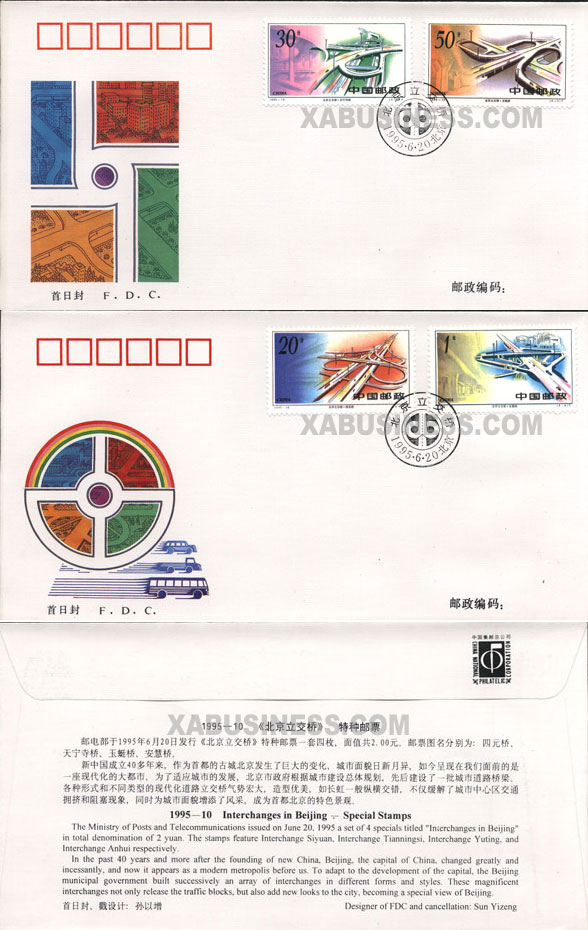
Interchanges in Beijing
Item location: China
Ships to: Worldwide
Terms of sale
To special order, please let us know what you are looking for. We will help you to meet your unique interests.
Technical details:
Scott No: 2575-78
Serial number: 1995-10
Values in set: 4
Date of issue: June 20, 1995
Designers: Yan Bingwu; Hu Zhenyuan
Size: 52*31mm
Perforation: 11.5
Sheet composition: 40
Printing process: gravure
Scott No: 2575-78
Serial number: 1995-10
Values in set: 4
Date of issue: June 20, 1995
Designers: Yan Bingwu; Hu Zhenyuan
Size: 52*31mm
Perforation: 11.5
Sheet composition: 40
Printing process: gravure
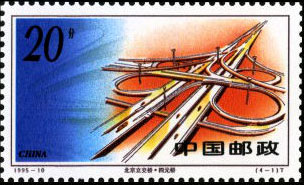
SN: (4-1) Title: Siyuan Flyover Values: 20 fen Size: 52*31mm Type: T(Mint) | |
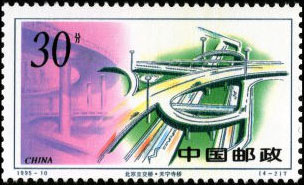
SN: (4-2) Title: Tianning Temple Flyover Values: 30 fen Size: 52*31mm Type: T(Mint) | |
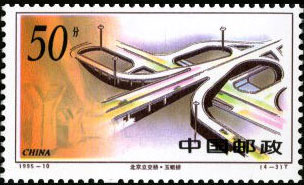
![]() Yuting Flyover | SN: (4-3) Title: Yuting Flyover Values: 50 fen Size: 52*31mm Type: T(Mint) |
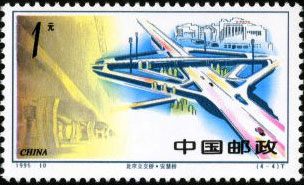
SN: (4-4) Title: Anhui Flyover Values: 100 fen Size: 52*31mm Type: T(Mint) |
Background info
Interchanges are multi-layer flyovers that have been built over the past several decades. With interchanges. Vehicles and pedestrians from all directions can cross each other by their own way without waiting for traffic light.
Interchanges generally fall into two categories, the simple flyovers and complicated interchanges. The former can only ensure the cross of vehicle at both the upper and lower layers, while the latter can guarantee the cross of vehicles at various layers and thus need more slip roads and occupy more land.
Interchanges have been developing rapidly over the past several decades since they can prevent vehicles from reducing speed and starting again at crossings and bring about considerable social-economic gains. China started to vigorously develop interchanges in mid-1970s. The first interchange in Beijing is the Fuxingmen Interchange which was built in 1974. Today, there are several hundreds of interchanges along the second, third and fourth ring roads of the city. In terms of architectural structure, the interchanges, with two to four layers, include simply flyovers and those in the shape of cloverleaf and butterfly, with H-and Y-type and single-column bridge piers.
At present, the largest interchange in China is the Siyuan Interchange in Beijing. It is a four-layer large interchange composed of 26 bridges, with the span between the single-column bridge piers being the largest in interchanges of the country. The bridges of the Siyuan Interchange, which covers 400,000 square meters of land, have a total length of 2.8 kilometers and a total area of 40,000 square meters.
Interchanges are multi-layer flyovers that have been built over the past several decades. With interchanges. Vehicles and pedestrians from all directions can cross each other by their own way without waiting for traffic light.
Interchanges generally fall into two categories, the simple flyovers and complicated interchanges. The former can only ensure the cross of vehicle at both the upper and lower layers, while the latter can guarantee the cross of vehicles at various layers and thus need more slip roads and occupy more land.
Interchanges have been developing rapidly over the past several decades since they can prevent vehicles from reducing speed and starting again at crossings and bring about considerable social-economic gains. China started to vigorously develop interchanges in mid-1970s. The first interchange in Beijing is the Fuxingmen Interchange which was built in 1974. Today, there are several hundreds of interchanges along the second, third and fourth ring roads of the city. In terms of architectural structure, the interchanges, with two to four layers, include simply flyovers and those in the shape of cloverleaf and butterfly, with H-and Y-type and single-column bridge piers.
At present, the largest interchange in China is the Siyuan Interchange in Beijing. It is a four-layer large interchange composed of 26 bridges, with the span between the single-column bridge piers being the largest in interchanges of the country. The bridges of the Siyuan Interchange, which covers 400,000 square meters of land, have a total length of 2.8 kilometers and a total area of 40,000 square meters.
Related items
1995-11 Scott 2579-80 20th Anniversary of the Diplomatic Relations Between China and Thailand
1995-12 Scott 2581-86 Taihu Lake
1995-13 Scott 2587-88 Posts in Ancient China
1995-14 Scott 2589-92 The 1500th Anniversary of the Shaolin Temple
1995-15 Scott 2597-98 Rare Animals (Joint Issue of China and Australia)
1995-16 Scott 2593-96 Cultural Relics of Tibet
1995-11 Scott 2579-80 20th Anniversary of the Diplomatic Relations Between China and Thailand
1995-12 Scott 2581-86 Taihu Lake
1995-13 Scott 2587-88 Posts in Ancient China
1995-14 Scott 2589-92 The 1500th Anniversary of the Shaolin Temple
1995-15 Scott 2597-98 Rare Animals (Joint Issue of China and Australia)
1995-16 Scott 2593-96 Cultural Relics of Tibet China stamps indexed by year
2008 | 2007 | 2006 | 2005 | 2004 | 2003 | 2002 | 2001 | 2000 | 1999 | 1998 | 1997 | 1996 | 1995 | 1994 | 1993 | 1992 | 1991 | 1990 | 1989 | 1988 | 1987 | 1986 | 1985 | 1984 | 1983 | 1982 | 1981 | 1980 | 1979 | 1978 | 1977 | 1976 | 1975 | 1974 | 1973 | 1972 | 1971 | 1970 | 1969 | 1968 | 1967 | 1966 | 1965 | 1964 | 1963 | 1962 | 1961 | 1960 | 1959 | 1958 | 1957 | 1956 | 1955 | 1954 | 1953 | 1952 | 1951 | 1950 | 1949
Send to friends - | -
Print this page
2008 | 2007 | 2006 | 2005 | 2004 | 2003 | 2002 | 2001 | 2000 | 1999 | 1998 | 1997 | 1996 | 1995 | 1994 | 1993 | 1992 | 1991 | 1990 | 1989 | 1988 | 1987 | 1986 | 1985 | 1984 | 1983 | 1982 | 1981 | 1980 | 1979 | 1978 | 1977 | 1976 | 1975 | 1974 | 1973 | 1972 | 1971 | 1970 | 1969 | 1968 | 1967 | 1966 | 1965 | 1964 | 1963 | 1962 | 1961 | 1960 | 1959 | 1958 | 1957 | 1956 | 1955 | 1954 | 1953 | 1952 | 1951 | 1950 | 1949
Terms of sale | Directory | Site Map | About us | Contact us
Copyrights (c) 2008 Reserved by Xabusiness.com