


Chinese Kungfu
Wushu, Chinese martial arts, known in the West as kungfu, is a cultural heritage of the Chinese people which has been enriched through the ages. With its graceful inovements and salubrious effects on health, it has a strong appeal to a vast multitude of people.
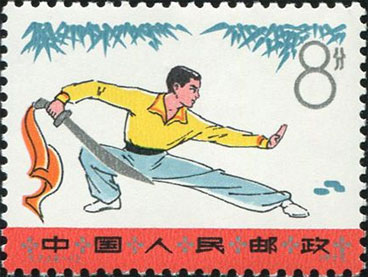
The origin of wushu may be traced back to prehistoric times
when our ancestors used stones and wooden clubs in hunting, both
for subsistence and self-defense. In tribal strifes they used
their tools of production as of war.
During the Shang(l7th - 16th century B.C.) and Zhou(11th century
- 221B.C.) dynasties, with the development of productive forces,
especially that of techniques in bronze casting, the variety of
weapons increaed and their quality improved.
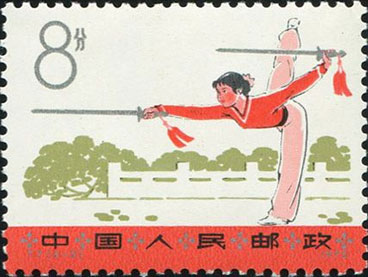
In the Jin(265 - 439 A.D.) and Southern and Northern(420 - 581A.D.) dynasties, Wushu came under the influence of Buddhism and Taoism. Ge Hong(284 - 364A.D.), a famous physician and Taoist philosopher, integrated wushu with qigong, an important branch of traditional Chinese medicine. His theories of "external and internal work" in wushu are still universally accepted today. The court examination system initiated in the Tang Dynasty (9l8 - 907A.D.)requried both military men and scholars to practice Wushu.
Because of its long history incorporating differences in culture,
ideology, region, and usage, wushu has developed into a great
variety of schools and styIes. There are over one hundred schools
of boxing in the Yellow River valley area and about eighty in
the Yangtze River basin. Each school has its own characteristics.
Changquan demands quickness and valour, and it is liked by young
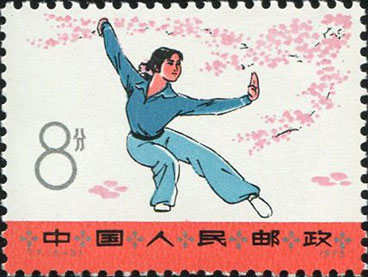
people. Taijiquan, charactered by its slow rhythm and gentle movements,
is suitable for people of all ages, especally elderly people.
Xingyiquan, vigorous in its balanced mothions and poised steps,
is
popular With young and middle-aged people. Nanquan is widespread
in China's southem area. Its practitioners utter shouts and cries
now and then to make their movements more forceful.
Shaolinquan, popular in the north, is known for its short routined
movements and swiftneSS and vigor. In certain styles such as Tanglang
Quan (The Mantis Boxing) and Zuiquan(The Drunkard
boxing), the practitioner imitates animalsand birds as wel as
drunken humans.
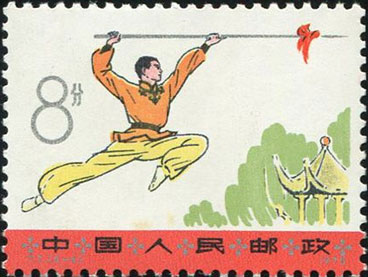
In spite of its rich variety, wushu has four main types: barehanded
boxing, the wielding of weapons, combat, and collective performances.
The weapons used in wushu fall into three categories: long weapons including spears and broadswords; short weapons
such as short swords, daggers and hooks; and flexible weapins
which include ninesection cudgels and three-section cudgels.
However, wushu is by no means litited to the external movement.
It emphasizes the full display of the internal temperament, mental
attitude and potential of the human being. The practice of wushu
not only strengthens the bones and muscles but also the internal
organs and intelligence. To be more specific, wushu stresses that
the mind directs the circulation of air flow(qi) within the bofy
and that the inner circulation of air generates the external strength,
thus demonstrating the comination of extenal and internal forces.
Cultivating air nows inside the body in order to improve the basic
structures inside the they is an important purpose of wushu exercises.
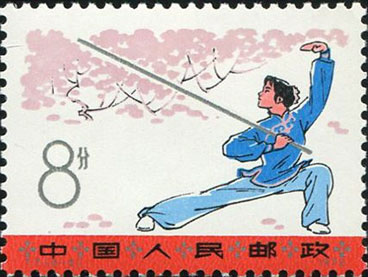
Chinese wushu is more than kungfu. It embodies a profound philosophy and a sense of human life and social values. It is the summtion of the code of conduct for the adjustment of the relationships between man and man and between man and nature. Wushu emphasizes traditions, experience and rational knowledge, all of which are clearly refiectcd in the martial ethics of wushu. Martial ethics advocates respect for human life. In ancient China, human beings were regarded as the most valuable treasure of nature. Man is called one of the "four greats," togther with the heavn, earth and truth, or law of natural activities. Martial ethics requires that a person exercises self-restraint, never abusing his abilities to seek personal gratification or to oppress those weaker than himself. He should seek to uphold justice, remain fearless in the face of brutality, and cultivate modesty and a spirit of copperation. Wushu is not only a way to enhance one's health and skills. Its long association with dance has lent an enriching artistic quality. At the same time, its emphasis on posture, composure, self-control, spirit, and lively exercise imbues it with a beautifying effect on the physic, and a positive effect on the character. These qualities turn wushu into wuyi - martial artistry.
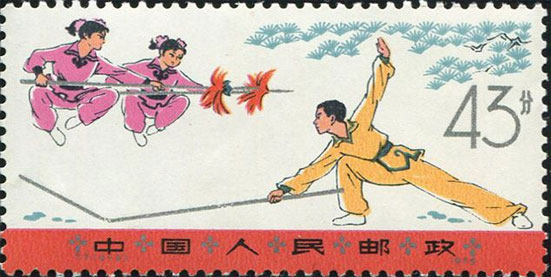
Wushu enjoys great popularity in China, and it is now captivating the attention of more and more people in the world because of its uniqueness and charisma originating from the traditional oriental culture.