

2002-23, Scott 3240 Folk Legend – Dong Yong and the Seventh Fairy
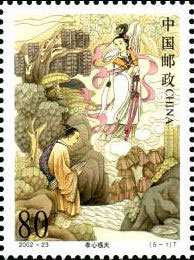
 (5-1), Dong Yong's Filial Love Moving Immortals, 80 fen, 30*40 mm
 (5-2), The Seventh Immortal Maiden Marrying Dong Yong, 80 fen, 30*40 mm
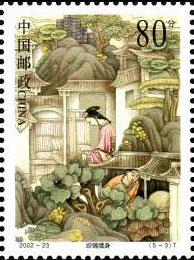 (5-3), The Seventh Immortal Maiden Weaving Brocade to Buy Dong's Freedom, 80 fen, 30*40 mm
 (5-4), Dong Yong Coming Back Home, 80 fen, 30*40 mm
 (5-5), Everlasting Love, 200 fen, 30*40 mm
Technical details
Scott No: 3240Serial number: 2002-23
Values in set: 5 (se-tenant)
Denomination: 5.20 yuan
Date of issue: 26th Oct. 2002
Designer: Yu Hongli
Size of stamps: 30*40 mm
Perforation: 13*13.5
Sheet composition: 20
Printing process: gravure
Printer: Beijing Postage Stamp Printing House
Themes: Culture, Literature,
Background
The stamp set is cataloged as 2002-23, titled Folk Legend – Dong Yong and the Seventh Fairy. It was issued on October 26, 2002. The set consists of five stamps in a photogravure edition printed by Beijing Stamp Printing Works. The designer is Duan Jizhang. The total face value is 5.2 yuan. Each stamp measures 30×40 mm, with a perforation gauge of 12 degrees. Each sheet contains 20 stamps, printed in a continuous strip of five.The story of Dong Yong and the Seventh Fairy is a widely circulated Chinese folk legend. The story dates back to the Han Dynasty and is recorded in In Search of the Supernatural. It tells the moving tale of Dong Yong, a filial son who sells himself into servitude to bury his father. Moved by his devotion, the Seventh Fairy descends from heaven and marries him. She weaves brocade to pay off his debt, but they are later forcibly separated by the Heavenly Court. The story promotes the virtues of filial piety and kindness and sincere love, making it a well-known classic of folk literature.
Stamp Designs and Historical Background
Filial Devotion Moves Heaven
Dong Yong's family was poor. After his father's death, he could not afford a burial, so he sold himself into servitude to a wealthy family in exchange for funeral expenses. His sincere filial devotion moved the Heavenly Court. The Seventh Fairy took pity on Dong Yong and resolved to descend to the mortal world. The stamp depicts Dong Yong in plain mourning clothes, keeping vigil at his father's grave, showing grief and reverence. It reflects the story's opening theme of filial piety.
Descending to the World and Forming a Bond
The Seventh Fairy bids farewell to the Heavenly Palace and descends to the mortal world, waiting for Dong Yong under the locust tree. The Earth God acts as matchmaker, and the two become husband and wife with the locust tree as witness. The stamp shows the two meeting for the first time under the ancient locust tree. The old tree witnesses their union, and the locust tree becomes an iconic token in this legend.
Weaving Brocade to Redeem Himself
The wealthy master requires Dong Yong's wife to weave one hundred bolts of brocade before Dong Yong's servitude can be lifted. The Seventh Fairy uses her divine power to weave day and night, completing the task on time. The stamp shows the Seventh Fairy sitting before the loom, weaving swiftly, using her skilled hands to help Dong Yong repay his debt and regain his freedom.
Completing the Service and Returning Home
The hundred bolts of brocade are completed on time. The master honors the agreement and cancels the servitude contract. Dong Yong and his wife gain their freedom and joyfully set out on their journey home, looking forward to a peaceful life in the mortal world. The stamp depicts the two walking together on a country road, accompanied by vegetation, full of the joy of hardship finally coming to an end.
Parting in the Heavenly Court
The good times do not last. The Jade Emperor learns that the Seventh Fairy has secretly descended to the mortal world and orders her to return to the Heavenly Palace immediately. Heavenly soldiers descend, forcing the two apart. The couple painfully bid farewell under the locust tree. The stamp depicts the sorrowful scene of their separation. The mortal couple is forcibly torn apart by heavenly law, leaving behind a timeless and poignant love story.
Artistic and Design Features
The stamps use the photogravure process, with warm and elegant colors and delicate lines, combining the charm of traditional New Year prints and gongbi figure painting. The stamps use a vertical format, printed in a continuous strip of five. The scenes progress in sequence, telling the complete legend like a comic strip. The figures are classical and graceful, and the scenes of the countryside, ancient trees, and loom simply enhance the plot. Through continuous narration, the stamp set recreates this classic folk legend, praising the virtues of filial piety and kindness and the faithful, unwavering love between people.
Share: 
Price List
Item location: China
Ships to: Worldwide
*Shipping (via registered air mail) is based on subtotal of order. See detials below.
* 1) for special items shipping and handling cost may be included. 2) Other fast shipping is available.
To special order, please let us know what you are looking for. We will help you to meet your unique interests.
Ships to: Worldwide
*Shipping (via registered air mail) is based on subtotal of order. See detials below.
| Order Subtotal | S & H |
| $0.01---$15.00 | US $5.00 |
| $15.01---$50.00 | US $6.00 |
| $50.01---$100.00 | US $7.00 |
| $100.01---$180.00 | US $8.00 |
| $180.01---over | US $9.00 |
To special order, please let us know what you are looking for. We will help you to meet your unique interests.


