

1993-13, Scott 2458-62 Longmen Grottoes
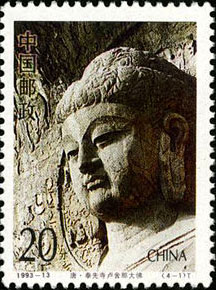
 (4-1), Tang Dynasty, Lushena Buddha (in Fengxian Temple), 20 fen, 30*40mm

Technical details
Scott No: 2458-62Serial number: 1993-13
Values in set: 4
Souvenir Sheet: 1
Date of issue: September 5, 1993
Designers: Ren Guoen; Wang Huming
Size: 30*40mm
Size of S/S: 150*75mm
Size of S/S stamp: 120*40mm
Perforation: 12
Sheet composition: 50
Printing process: offset
Background
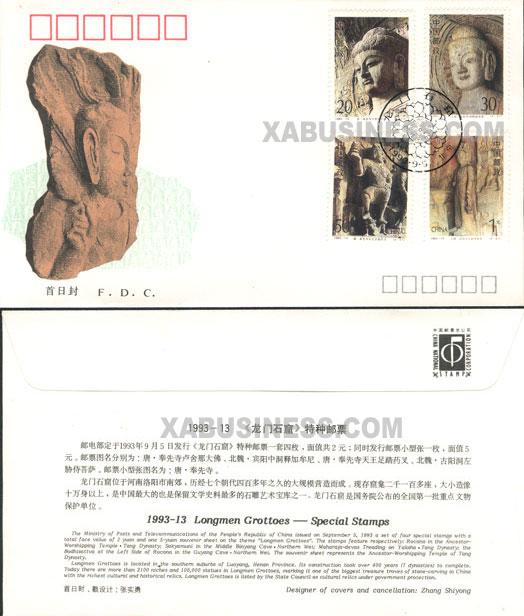
The special stamp set Longmen Grottoes, catalog number 1993-13, was issued on September 5, 1993. It consists of four stamps and one souvenir sheet, produced using offset printing. The stamps measure 30×40 mm, with a perforation gauge of 12 degrees. Each sheet contains 50 stamps. The souvenir sheet measures 150×75 mm, and the stamp image measures 120×40 mm. The stamps were designed by Ren Guoen, with souvenir sheet photography by Ni Jiade, and printed by Shenyang Post and Telecommunications Printing Factory in Liaoning Province.Thematic Focus of the Set
This set takes the Longmen Grottoes in Luoyang as its theme. Longmen was first carved when Emperor Xiaowen of Northern Wei moved the capital to Luoyang. Over centuries of construction, the Northern Wei and Tang Dynasty sculptures achieved the highest accomplishments. It is a massive stone carving art treasure house in the Central Plains and an important relic of cultural integration along the Silk Road. The stamps feature representative sculptures from the Northern Wei and Tang dynasties, showcasing the distinctly different sculptural aesthetics of the two eras—contrasting the slender, refined Northern Dynasties style with the full, robust High Tang style. It documents the pinnacle of ancient stone carving craftsmanship and promotes Chinese stone-carved Buddhist art.
Stamp Designs and Historical Background
Tang – Vairocana Buddha at Fengxian Temple
The image is a close-up of the head of the Vairocana Buddha at Fengxian Temple. Fengxian Temple is the largest niche at Longmen. The Buddha's face is full and round, with a calm and compassionate gaze. According to legend, it was modeled after Empress Wu Zetian's appearance. It is the most famous icon of Tang Dynasty Buddhist sculpture, fully displaying the elegant and grand artistic style of the High Tang.
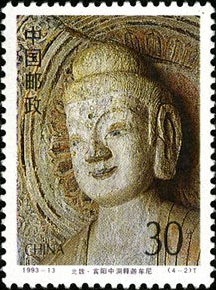
Northern Wei – Shakyamuni Buddha in the Middle Binyang Cave
The image is taken from the head of the main Buddha in the Middle Binyang Cave. The Middle Binyang Cave is a Northern Wei imperial cave. The Buddha's face is thin and his expression gentle and restrained, a typical "slender bones and pure image" Northern Dynasties sculptural style, reflecting the aesthetic fashion of Central Plains Buddhist sculpture during the Northern Wei period.
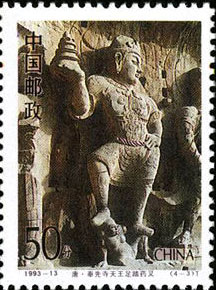
Tang – Heavenly King Treading on a Yaksha at Fengxian Temple
The image depicts the guardian Heavenly King statue at Fengxian Temple. The Heavenly King is mighty and powerful, treading on a yaksha beneath his feet. The yaksha's posture is vivid. The contrast between strength and submission is full of tension. It is a classic Tang Dynasty guardian deity image, full of power.
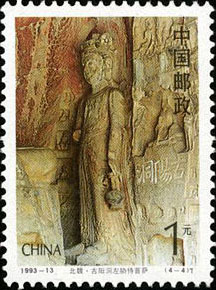
Northern Wei – Left Attendant Bodhisattva in Guyang Cave
The image features an attendant bodhisattva in Guyang Cave. Guyang Cave is the earliest cave at Longmen. The bodhisattva has a light posture and flowing robes. After a thousand years of weathering, it carries a simple and weathered texture, representing the artistic appearance of Longmen's early sculptures.
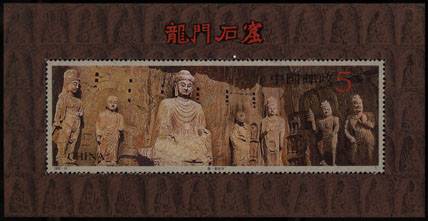
Souvenir Sheet: Tang – Fengxian Temple
The souvenir sheet adopts a panoramic composition, fully presenting the group layout of the nine statues of Fengxian Temple. The Vairocana Buddha is in the center, with disciples, bodhisattvas, Heavenly Kings, and guardians arranged on both sides. The group of statues in the niche is arranged in an orderly and scattered manner, restoring the overall magnificent scene of the Fengxian Temple cave.
Artistic and Design Features
The set faithfully reproduces the weathered and mottled stone texture of the stone carvings. The tones are simple and steady, without extraneous embellishment. The four sculptures alternate between Tang and Northern Wei, clearly presenting the differences in sculptural styles between the two eras. There are two head close-ups and two full-body standing figures, providing rich perspectives. The souvenir sheet concludes with a panoramic group portrait, complementing the partial close-ups of the stamp set. Realistic and dignified, it echoes the artistic narrative thread of the Dunhuang Grottoes stamps. It is a classic work in the category of grotto and stone carving stamps.
Share: 
Price List
Item location: China
Ships to: Worldwide
*Shipping (via registered air mail) is based on subtotal of order. See detials below.
* 1) for special items shipping and handling cost may be included. 2) Other fast shipping is available.
To special order, please let us know what you are looking for. We will help you to meet your unique interests.
Ships to: Worldwide
*Shipping (via registered air mail) is based on subtotal of order. See detials below.
| Order Subtotal | S & H |
| $0.01---$15.00 | US $5.00 |
| $15.01---$50.00 | US $6.00 |
| $50.01---$100.00 | US $7.00 |
| $100.01---$180.00 | US $8.00 |
| $180.01---over | US $9.00 |
To special order, please let us know what you are looking for. We will help you to meet your unique interests.


