

1993-11, Scott 2463-66 Bees
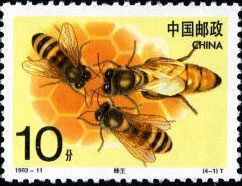
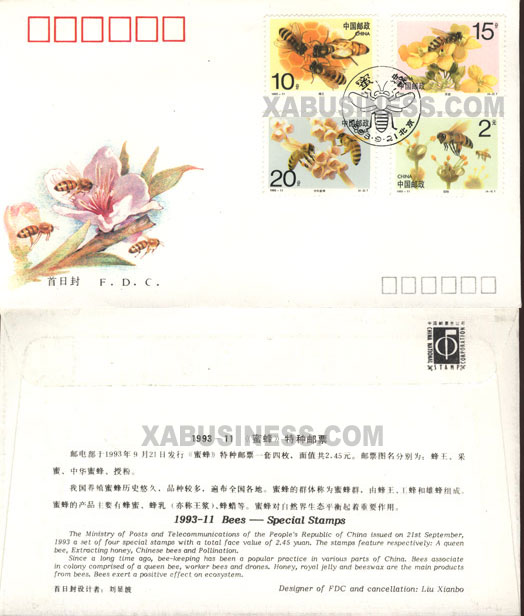
 (4-1), Queen Bee, 10 fen, 40*30mm

Technical details
Scott No: 2463-66Serial number: 1993-11
Values in set: 4
Date of issue: September 21, 1993
Designers: Liu Xanbo
Size: 40*30mm
Perforation: 11.5
Sheet composition: 40
Printing process: gravure
Background
The special stamp set Bees, catalog number 1993-11, was issued on September 21, 1993. It consists of four stamps, produced using the photogravure process. The stamps measure 40×30 mm, with a perforation gauge of 11.5 degrees. Each sheet contains 40 stamps. The stamps were designed by Liu Xianbo and printed by Beijing Stamp Printing Works.Thematic Focus of the Set
This set was issued in conjunction with the 33rd International Apicultural Congress held in Beijing. Bees are social insects. They are not only the source of honey, royal jelly, and other bee products but also extremely important pollinating insects in agricultural production. The stamps arrange their images from four perspectives: colony structure, honey collection, native unique bee species, and ecological pollination. They balance the value of the beekeeping industry with ecological significance, popularize bee science knowledge, praise the diligent and dedicated characteristics of bees, and simultaneously showcase China's rich bee species resources and beekeeping achievements to the international beekeeping community.
Stamp Designs and Historical Background
Queen Bee
The image depicts the queen bee and several worker bees gathered on the honeycomb. The queen is slender and is the only individual in the colony with reproductive capacity. She sustains the reproduction and continuity of the entire colony and is the core of the hive.
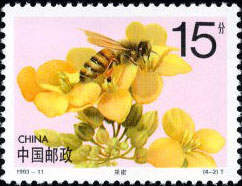
Honey Collection
The image shows a worker bee landing on golden rapeseed flowers to collect nectar. The bee carries the nectar back to the hive to make honey. Rapeseed is an important nectar source crop in southern China and a common sea of flowers scene in beekeeping production.
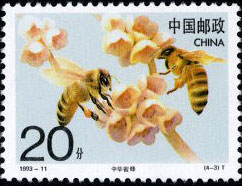
Chinese Honeybee
The main subject is the Chinese honeybee (Apis cerana cerana), a native bee species of China with a long history of domestication. It is adapted to the local climate and wild mountain flowers, skilled at utilizing scattered nectar sources, and plays an irreplaceable role in pollinating native plants in mountainous areas.
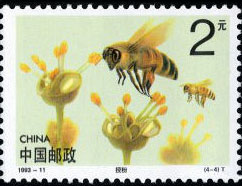
Pollination
The image depicts bees shuttling among the pistils of fruit tree flowers. Pollen adheres to the bee's body, and pollination is completed during the flower-visiting process. Bee pollination can significantly increase the fruit-setting rate of melon and fruit crops. Its ecological value far exceeds bee products themselves, making it an indispensable ecological aid in modern agriculture.
Artistic and Design Features
The set uses a realistic scientific illustration style, with bright and lively colors. Each stamp is paired with corresponding nectar-source flowers, and the insect details are clearly depicted with vivid and accurate forms. The four stamps sequentially explain colony composition, honey production, native species, and ecological function, with a progressive logical structure and prominent educational value. The images are fresh and soft. It is an outstanding work in the category of insect stamps that focuses on industry and ecological education.
Share: 
Price List
Item location: China
Ships to: Worldwide
*Shipping (via registered air mail) is based on subtotal of order. See detials below.
* 1) for special items shipping and handling cost may be included. 2) Other fast shipping is available.
To special order, please let us know what you are looking for. We will help you to meet your unique interests.
Ships to: Worldwide
*Shipping (via registered air mail) is based on subtotal of order. See detials below.
| Order Subtotal | S & H |
| $0.01---$15.00 | US $5.00 |
| $15.01---$50.00 | US $6.00 |
| $50.01---$100.00 | US $7.00 |
| $100.01---$180.00 | US $8.00 |
| $180.01---over | US $9.00 |
To special order, please let us know what you are looking for. We will help you to meet your unique interests.


